
Renewable energy innovations are advanced technologies and methodologies that go beyond established solar, wind, and hydroelectric systems to accelerate the transition to sustainable energy, including breakthroughs in energy storage, grid integration, materials science, and hybrid generation methods. These innovations address the core limitations that have historically constrained renewable deployment: intermittency, efficiency losses, storage capacity, and grid stability.
The imperative for innovation has never been more urgent. Europe’s 2026 energy landscape demands solutions that can deliver reliable, cost-competitive power at scale while meeting ambitious decarbonization targets. Traditional renewable installations, while foundational, require complementary advances to overcome technical and economic barriers. Storage technologies now extend discharge durations from hours to weeks. Novel photovoltaic materials push conversion efficiencies past conventional silicon limits. Smart grid systems orchestrate distributed generation with precision that was unimaginable a decade ago.
What distinguishes genuine innovation from incremental improvement? The innovations reshaping the sector today fundamentally alter performance parameters, cost structures, or application possibilities. They enable renewable energy to serve roles previously reserved for dispatchable fossil generation. They create entirely new market segments and business models. They transform obstacles into opportunities through collaboration across disciplines, from nanotechnology and artificial intelligence to electrochemistry and power electronics.
This article maps the innovation frontier across four dimensions: defining what qualifies as breakthrough technology, explaining the mechanisms that deliver performance gains, categorizing the types of innovations currently emerging from laboratories and pilot projects into commercial reality, and examining their practical applications in real-world energy systems. Understanding this landscape equips stakeholders to identify promising technologies, allocate investment strategically, and participate in shaping Europe’s sustainable energy future.
What Are Renewable Energy Innovations?
Renewable energy innovations represent breakthrough technologies and approaches that fundamentally advance how we generate, store, distribute and consume energy from renewable sources. Unlike conventional renewable technologies, such as standard silicon solar panels or traditional onshore wind turbines, these innovations introduce novel materials, architectures, processes or system designs that deliver step-change improvements in performance, cost-effectiveness or deployment versatility.
At their core, renewable energy innovations push past the incremental refinements of established technologies. They include next-generation solar cells that combine multiple light-absorbing layers to capture far more of the sun’s spectrum, advanced battery chemistries that store energy more densely and affordably, intelligent grid systems that coordinate millions of distributed energy assets in real time, and entirely new pathways like green hydrogen production that unlock renewable energy for sectors previously reliant on fossil fuels.
These innovations span a broad spectrum of maturity and impact:
- Incremental innovations
- Evolutionary improvements to existing technologies that enhance efficiency, reduce costs or extend operational lifespans without altering fundamental design principles.
- Disruptive innovations
- Breakthrough technologies that introduce entirely new capabilities, create new markets or enable previously impossible applications, often rendering older approaches obsolete.
- Technology Readiness Levels (TRL)
- A standardized scale from 1 (basic research) to 9 (full commercial deployment) that indicates how mature an innovation is and how close to widespread market adoption.
- Market deployment stages
- The phases an innovation passes through from pilot projects and early adopters to mainstream commercialization and mass-market penetration.
What unites these diverse innovations is their potential to accelerate the energy transition. They address persistent challenges, intermittency, storage capacity, grid stability, land constraints, capital costs, that have historically limited renewable energy’s reach. By expanding the technical and economic boundaries of what renewable systems can achieve, these innovations make carbon neutrality feasible across residential rooftops, industrial complexes, remote communities and continent-spanning power grids. They transform renewable energy from a supplementary resource into the backbone of a modern, resilient energy system.
How Renewable Energy Innovations Work
Advanced Solar Technologies
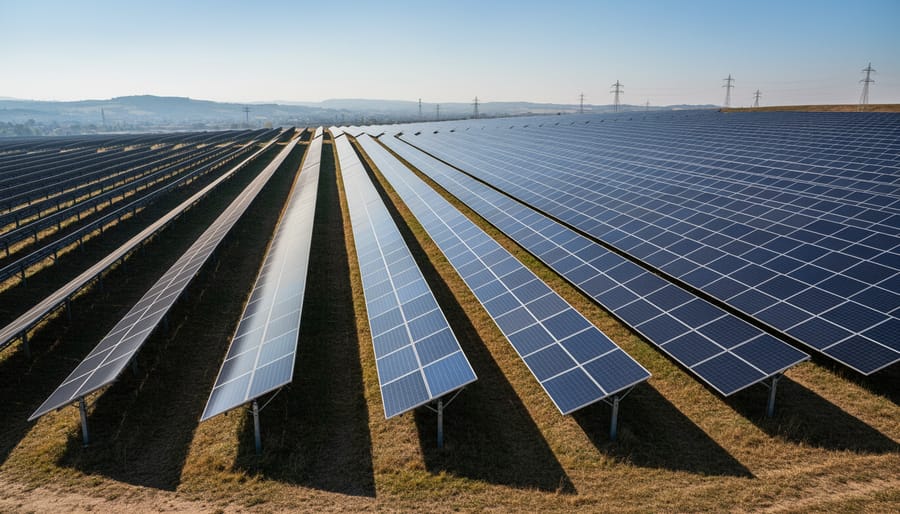
Advanced solar technologies redesign how photovoltaic cells capture and convert sunlight, unlocking efficiency gains that were unattainable just a few years ago. These innovations address longstanding limitations of conventional silicon panels while creating deployment options for spaces that were previously unsuitable for solar generation.
Tandem solar cells stack multiple light-absorbing layers, each optimized to capture a different segment of the solar spectrum. A typical tandem architecture pairs silicon with a perovskite top layer: the perovskite absorbs high-energy blue and green photons, while silicon beneath captures red and near-infrared wavelengths that pass through. This division of labor allows a single module to convert over 30% of incoming sunlight into electricity, compared to 20-22% for standard silicon alone. The result is more power from the same rooftop area, which matters acutely in space-constrained urban settings and for applications where maximizing output per square meter drives project economics.
Bifacial modules capture sunlight from both the front and rear surfaces. Whereas traditional panels have an opaque backing, bifacial cells expose both sides to light. Ground-reflected radiation, albedo, strikes the rear surface, and bifacial systems boost power output by 10-30%, depending on installation height, ground reflectivity and array tilt. This design proves especially effective over reflective surfaces like white roofs, sandy terrain or snow-covered ground, and it extends the productive window of the day as low-angle sunlight bounces underneath the modules.
Building-integrated photovoltaics embed solar cells directly into facades, windows or roofing materials, turning structural elements into generators. BIPV replaces conventional building components rather than adding panels on top, which reduces material costs and preserves aesthetics in architecturally sensitive projects. Semi-transparent BIPV glass allows daylight into interiors while generating electricity, enabling net-zero office towers and commercial buildings that produce their own power without sacrificing natural light or design flexibility.
Energy Storage and Grid Integration
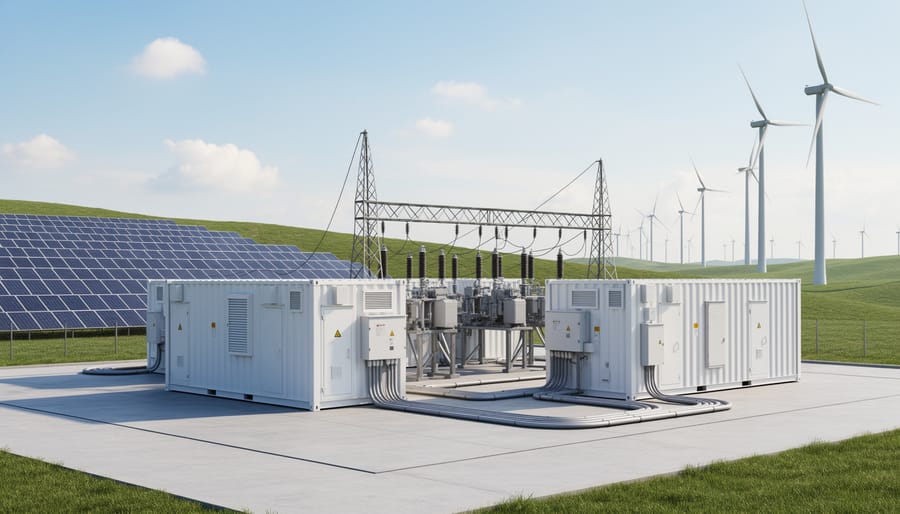
Energy storage innovations address renewable energy’s fundamental intermittency challenge by capturing excess generation during peak production hours and releasing it when demand rises or generation drops. Next-generation battery technologies have evolved far beyond conventional lithium-ion systems. Solid-state batteries replace liquid electrolytes with solid materials, delivering higher energy density, faster charging, and enhanced safety while reducing fire risks. Flow batteries, such as vanadium redox systems, store energy in liquid electrolyte tanks, allowing independent scaling of power and capacity for multi-hour grid support. Sodium-ion batteries leverage abundant materials to reduce costs and supply chain dependencies, making storage more accessible across diverse markets.
Green hydrogen systems convert surplus renewable electricity into hydrogen through electrolysis, splitting water molecules into hydrogen and oxygen. This stored chemical energy can later generate electricity via fuel cells or power industrial processes, transport, and heating applications, effectively turning renewable energy into a dispatchable fuel. Modern electrolysers achieve higher efficiencies and faster response times, enabling them to absorb variable renewable output and stabilize grid operations.
Smart grid technologies orchestrate this complex ecosystem through advanced sensors, real-time data analytics, and automated control systems. These platforms predict generation patterns, balance supply with demand across distributed assets, and coordinate battery discharge timing to maintain grid stability. By enabling bidirectional power flows and dynamic pricing signals, smart grids transform intermittent renewable sources into reliable, responsive energy systems that meet continuous electricity needs without fossil fuel backup.
Digital and AI-Enabled Optimization
Artificial intelligence and machine learning algorithms process vast streams of data from weather satellites, grid sensors, and generation assets to predict renewable energy output with unprecedented accuracy, often days in advance, enabling utilities to balance supply and demand more effectively. IoT-connected devices across solar farms and wind installations continuously monitor performance at the panel or turbine level, identifying inefficiencies, predicting maintenance needs before failures occur, and automatically adjusting configurations to maximize yield under changing conditions. AI-driven energy management systems orchestrate distributed renewable resources, battery storage, and flexible loads in real-time, optimizing when to generate, store, or dispatch power based on grid prices, weather forecasts, and consumption patterns. These digital tools transform intermittent renewable sources into predictable, manageable assets, reducing curtailment, lowering operational costs, and accelerating the integration of higher renewable penetration across European grids.
Types of Renewable Energy Innovations
Solar Energy Innovations
Breakthrough solar technologies are redefining what photovoltaics can achieve in 2026, pushing efficiency limits and unlocking deployment contexts once considered impractical. Perovskite solar cells represent the most dramatic leap: laboratory prototypes now exceed 33% efficiency in tandem configurations with silicon, nearly doubling conventional single-junction performance. Their solution-processable manufacturing slashes production costs while maintaining flexibility, enabling applications from lightweight rooftop installations to curved building facades where traditional rigid panels fail.
Tandem architectures layer multiple absorber materials to capture broader portions of the solar spectrum. Commercial manufacturers are scaling perovskite-on-silicon tandems that achieve over 30% field efficiency, extracting significantly more power per square meter than standard modules. This density advantage proves critical for space-constrained urban environments and high-value land.
Floating solar installations exploit untapped water surfaces, reservoirs, irrigation ponds, coastal areas, where land acquisition poses barriers. These systems benefit from natural cooling that boosts output by 5-10% while reducing water evaporation and algae growth. Europe’s largest floating arrays now exceed 100 megawatts, demonstrating utility-scale viability.
Agrivoltaics integrate solar generation with agricultural production beneath elevated panel arrays. Strategic panel spacing and height allow continued crop cultivation or livestock grazing while the installations provide shade that can improve yields for certain crops in hot climates. This dual-use approach resolves land-use conflicts, generating income streams for farmers while advancing renewable capacity without displacing food production.
Energy Storage Solutions
Innovations in energy storage have become essential to overcoming the intermittency challenge that has long constrained renewable energy deployment. Lithium iron phosphate (LFP) batteries now dominate utility-scale installations, offering greater thermal stability and longer cycle life than traditional lithium-ion chemistries, some systems achieving over 10,000 charge-discharge cycles while maintaining 80% capacity.
Flow batteries represent a paradigm shift for long-duration storage, with vanadium redox systems scaling independently in power and capacity. Unlike solid-state batteries, flow batteries store energy in liquid electrolytes held in external tanks, enabling 8-12 hour discharge durations ideal for smoothing multi-day renewable generation variability.
Compressed air energy storage (CAES) facilities inject air into underground caverns during surplus generation periods, then release it through turbines when demand peaks. Modern adiabatic CAES systems capture compression heat for reuse, achieving round-trip efficiencies near 70%.
Thermal storage innovations include molten salt systems that retain solar heat at 565°C for up to 15 hours, allowing concentrated solar power plants to generate electricity after sunset. Phase-change materials embedded in building structures absorb excess renewable electricity as heat during off-peak hours, reducing grid stress during evening demand spikes.
Smart Grid and System Integration Technologies
Smart grid technologies represent the digital nervous system enabling renewable energy to function as a reliable, dispatchable power source. At their core, these systems use sensors, advanced metering infrastructure, and real-time analytics to balance supply and demand across distributed generation assets. Virtual power plants aggregate thousands of rooftop solar installations, battery systems, and controllable loads into a coordinated resource that grid operators can dispatch like a conventional power station, without the carbon emissions.
Demand response platforms shift electricity consumption to match renewable availability, automatically adjusting heating systems, industrial processes, or EV charging when solar and wind output peaks. This load flexibility reduces curtailment and maximizes renewable utilization. Blockchain-enabled trading platforms allow prosumers to sell excess generation directly to neighbors through transparent, automated transactions, creating peer-to-peer energy markets that bypass traditional utility structures.
These integration technologies solve intermittency through coordination rather than brute-force storage alone. By orchestrating generation, consumption, and storage assets across regions, smart grids transform variable renewables into a stable, responsive energy system that maintains grid stability even at high penetration levels.
Emerging and Cross-Cutting Innovations
Green hydrogen production stands at the forefront of emerging renewable innovations, using electrolysis powered by solar and wind to split water into hydrogen and oxygen without carbon emissions. This technology enables long-duration energy storage and provides clean fuel for aviation, shipping, and heavy industry, sectors where direct electrification remains challenging. Current pilot projects across Europe demonstrate production costs declining toward commercial viability as electrolyzer efficiency improves.
Direct air capture (DAC) systems paired with renewable energy offer a compelling pathway to carbon negativity. These installations use renewable electricity to extract CO₂ directly from the atmosphere, which can then be sequestered permanently or converted into synthetic fuels. While energy-intensive, DAC becomes carbon-negative when powered entirely by renewables, creating a closed-loop system that reverses historical emissions.
Innovative financing mechanisms are accelerating deployment across all renewable sectors. Green bonds specifically earmarked for clean energy projects, power purchase agreements that reduce upfront costs, and crowdfunding platforms democratize investment access. Blended finance structures combining public grants with private capital de-risk early-stage technologies, while energy-as-a-service models eliminate capital barriers for commercial adopters. These financial innovations transform how renewable projects secure funding and expand market reach beyond traditional investor pools.
Uses and Applications of Renewable Energy Innovations
Decentralized Energy Systems
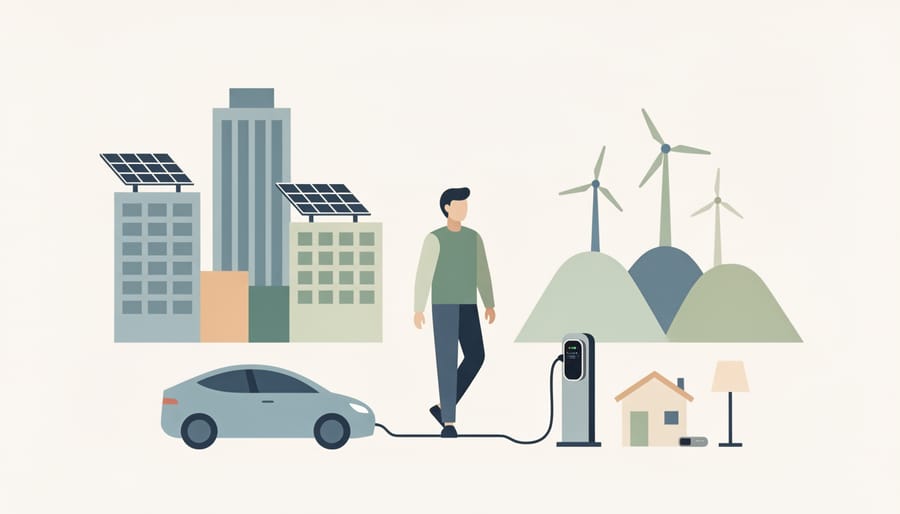
Decentralized energy systems represent a fundamental shift from traditional centralized power generation, placing control and production capacity directly in the hands of residential and commercial users. Rooftop solar installations paired with advanced battery storage now enable households to generate, store, and manage their own electricity, reducing grid dependence and protecting against outages. Smart inverters and energy management systems optimize consumption patterns in real-time, automatically shifting loads to periods of peak generation or low grid demand.
Community solar projects extend this model beyond individual properties, allowing multiple stakeholders to share in the benefits of a single installation. These arrangements prove particularly valuable for renters, apartment dwellers, and businesses without suitable roof space. Virtual net metering allocates production credits proportionally, while blockchain platforms facilitate transparent energy trading between participants.
Microgrids connect multiple distributed energy resources within defined boundaries, operating independently or in coordination with the main grid. Universities, hospitals, and industrial parks increasingly deploy these resilient systems, combining solar arrays, battery banks, and backup generation to ensure continuous power supply. When scaled across neighborhoods, these networks create energy communities that balance local supply and demand dynamically, reducing transmission losses and enhancing regional grid stability.
Industrial and Large-Scale Applications
At the industrial and utility scale, renewable energy innovations are proving critical for decarbonizing sectors that once seemed impossible to electrify. Energy-intensive industries such as steel, cement, and chemical manufacturing are now deploying green hydrogen produced from renewable electricity to replace fossil fuels in high-temperature processes. This shift represents a fundamental breakthrough: hydrogen generated via electrolysis powered by solar or wind can reach temperatures exceeding 1,500°C, enabling clean production of materials that account for substantial global emissions.
Utility-scale solar farms with integrated battery storage have moved from pilot projects to standard infrastructure across Europe in 2026. These installations combine gigawatt-scale photovoltaic arrays with lithium-ion or flow battery systems capable of storing hundreds of megawatt-hours, delivering dispatchable renewable power that matches grid demand patterns rather than weather conditions. The economics have shifted decisively: combined solar-plus-storage systems now compete directly with conventional power plants on cost while providing greater flexibility.
Large-scale implementations in sectors like aluminium smelting and data centers demonstrate how innovations enable 24/7 renewable operations that were technically infeasible just five years ago.
Urban and Infrastructure Integration
Cities are becoming testbeds for renewable energy innovations that embed clean power directly into the fabric of urban life. Building-integrated photovoltaics transform facades, windows, and rooftops into energy-generating surfaces without compromising architectural design, office towers in Amsterdam and Berlin now produce significant portions of their own electricity through transparent solar glass and aesthetic solar cladding. These installations generate power where it’s consumed, reducing transmission losses and grid strain.
Electric vehicle charging networks increasingly pair fast-charging stations with on-site solar canopies and battery storage, creating self-sufficient energy hubs that charge vehicles even during grid outages. Copenhagen and Paris have deployed thousands of solar-powered charging points that balance load through smart controllers, charging vehicles when renewable generation peaks and feeding excess energy back to buildings during demand surges.
District energy networks are evolving beyond traditional heating systems to integrate renewable electricity, thermal storage, and waste heat recovery. Stockholm’s district network now incorporates solar thermal arrays and geothermal heat pumps that work alongside data center waste heat, supplying carbon-neutral heating and cooling to entire neighborhoods through a single interconnected system that optimizes energy flow in real-time based on weather forecasts and occupancy patterns.
Collaboration and Market Trends Driving Innovation
The renewable energy innovation ecosystem in 2026 is characterized by unprecedented collaboration across public and private sectors, driven by ambitious climate targets and the recognition that breakthrough technologies require coordinated effort. European Union policy frameworks, particularly the revised Renewable Energy Directive and the Innovation Fund, have created regulatory certainty and financial mechanisms that accelerate technology deployment from lab to market. Member states are aligning national strategies with the EU’s 2050 carbon neutrality goal, establishing dedicated innovation funding streams and streamlining permitting processes for demonstration projects.
Public-private partnerships have emerged as the primary vehicle for de-risking early-stage technologies and scaling proven innovations. These collaborations pool resources from government agencies, utilities, technology developers, and financial institutions to overcome the “valley of death” that typically separates promising prototypes from commercial viability. Research consortia such as the European Solar Manufacturing Council and regional innovation clusters are facilitating knowledge transfer, standardization efforts, and shared infrastructure that reduce development costs and accelerate time-to-market for breakthrough solutions.
Key market and policy developments shaping the innovation landscape in 2026 include:
- EU Innovation Fund allocating €40 billion for clean technology demonstration projects through 2030
- National hydrogen strategies in 15 European countries creating demand pull for electrolyzer and fuel cell innovations
- Corporate renewable energy procurement exceeding 100 GW annually, with Fortune 500 companies prioritizing innovative solutions
- Blended finance instruments combining concessional public funding with private capital to support technology scale-up
- Cross-border research initiatives linking universities, national labs, and industry in multi-year development programs
- Regulatory sandboxes in multiple jurisdictions enabling real-world testing of grid innovations and peer-to-peer energy trading
Investment flows tell a compelling story of market confidence. Venture capital and private equity funding for renewable energy technology startups reached record levels, with particular concentration in energy storage, green hydrogen, and grid digitalization. Institutional investors, recognizing both climate risk and opportunity, are increasingly directing capital toward innovation-stage companies rather than only mature technologies. This shift reflects growing sophistication in assessing technology readiness levels and commercialization pathways.
The innovation ecosystem benefits from horizontal collaboration across traditionally separate sectors. Automakers partner with energy companies on vehicle-to-grid integration, software firms work with utilities on AI-driven forecasting, and construction companies collaborate with solar manufacturers on building-integrated systems. These cross-sector alliances bring diverse expertise and accelerate the development of integrated solutions that address multiple energy challenges simultaneously, creating network effects that amplify the impact of individual innovations.
Common Questions About Renewable Energy Innovations
Stakeholders navigating the renewable energy innovation landscape regularly encounter questions about feasibility, costs, and implementation pathways. Understanding these fundamentals helps inform strategic decisions and enables more effective collaboration across the energy ecosystem.
What are the typical investment timelines for renewable energy innovations?
Investment horizons vary by technology maturity, with early-stage innovations requiring 5-10 years for commercialization while proven technologies like advanced solar modules can achieve returns within 3-5 years. Portfolio diversification across technology readiness levels helps balance risk and opportunity.
How quickly are costs declining for innovative renewable technologies?
Cost trajectories follow learning curves where each doubling of cumulative production reduces costs by 15-25 percent for most renewable technologies. Advanced solar innovations and battery storage have demonstrated particularly steep cost declines as manufacturing scales and supply chains mature.
Which renewable energy innovations are ready for commercial deployment today?
Bifacial solar modules, lithium-ion storage systems, smart inverters, and grid management software have reached commercial maturity and are being deployed at scale. Perovskite-silicon tandem cells and green hydrogen electrolyzers are transitioning from pilot projects to early commercial installations.
What policy frameworks best support renewable energy innovation?
Effective policies combine direct research funding, investment tax credits, regulatory sandboxes for testing new technologies, and long-term carbon pricing signals that create market certainty. Successful frameworks also address grid access, permitting streamlining, and workforce development to remove deployment barriers.
Beyond these core considerations, stakeholders often seek clarity on risk mitigation strategies when investing in emerging technologies. Proven approaches include phased deployment that starts with pilot projects, partnerships with established technology providers, and contractual structures that align incentives between developers and investors. The most successful innovation initiatives maintain flexibility to adapt as technologies evolve while establishing clear performance milestones that trigger additional investment tranches.
Regulatory considerations also warrant careful attention, particularly for innovations that challenge existing utility business models or require new grid interconnection standards. Engaging regulators early in the development process and participating in industry working groups helps shape frameworks that enable rather than constrain innovation. Many European markets have established innovation-friendly regulatory sandboxes that allow testing of novel technologies and business models under controlled conditions before full-scale deployment.
Technology readiness assessments provide another critical decision-making tool. Innovations at Technology Readiness Level 7 or higher have been demonstrated in operational environments and carry lower technical risk, while earlier-stage technologies offer potentially higher returns but require more patient capital and active risk management. Matching investment strategies to technology maturity and organizational risk tolerance creates more sustainable innovation portfolios.
how it works
Renewable energy innovations function by overcoming the fundamental limitations of first-generation technologies through three core mechanisms: enhanced energy conversion, intelligent system integration, and adaptive operational control.
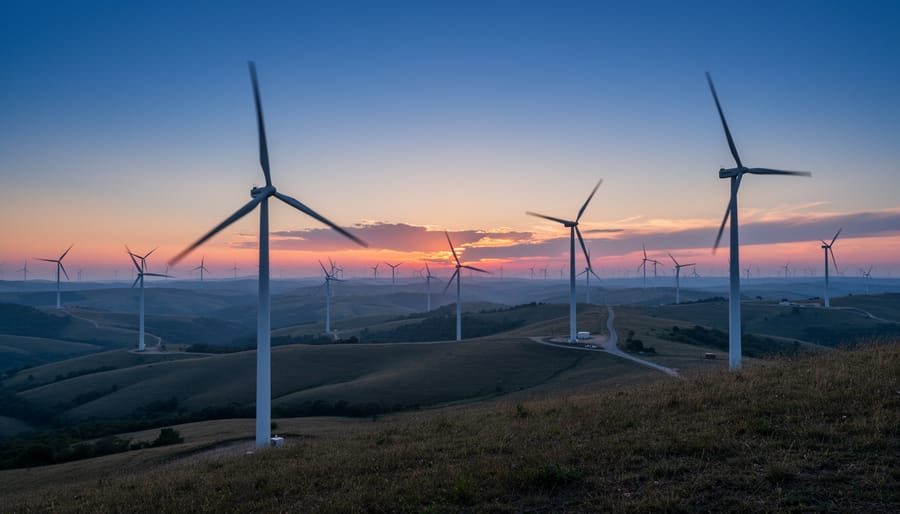
At the conversion level, breakthrough materials and architectures extract more energy from natural resources. Tandem solar cells, for instance, layer multiple light-absorbing materials to capture different wavelengths simultaneously, achieving conversion efficiencies above 30% compared to conventional silicon’s 20-22%. Similarly, advanced wind turbine designs use taller towers and longer blades with optimized aerodynamics to access stronger, more consistent winds at higher altitudes.
The integration layer addresses intermittency through sophisticated storage and grid management. Next-generation batteries store excess renewable energy during peak production periods, releasing it when demand rises or generation falls. Smart grid systems continuously balance supply and demand across distributed energy sources, preventing waste and maintaining stability.
Digital optimization forms the third mechanism. Machine learning algorithms analyze weather patterns, consumption data, and equipment performance in real-time, predicting output fluctuations and adjusting operations milliseconds before conditions change. This predictive capability transforms variable renewable resources into reliable, dispatchable power that meets grid requirements as effectively as conventional generation.
Types or components
Renewable energy innovations span multiple interconnected components that together form a comprehensive transformation of the energy system. At the core are generation technologiesadvanced solar architectures like perovskite-silicon tandems, offshore wind turbines with floating platforms, and geothermal systems using enhanced drilling techniques. These capture energy more efficiently and in previously inaccessible locations.
Storage systems form the second critical component, encompassing lithium-ion variants optimized for grid use, flow batteries for duration storage, and green hydrogen as a chemical energy carrier. Without reliable storage, intermittent renewables cannot meet constant demand.
Grid integration infrastructure includes smart inverters, AI-powered forecasting platforms, and virtual power plants that aggregate distributed resources. These digital layers enable renewables to provide the stability traditionally supplied by fossil plants.
Finally, enabling technologies such as advanced materials (lighter turbine blades, flexible solar films), power electronics (high-efficiency converters), and blockchain-based trading platforms create the conditions for rapid scaling. Each component advances independently while contributing to an integrated, resilient renewable energy ecosystem.
Renewable energy innovations are fundamentally reshaping how we generate, store, and distribute power, and they offer a clear pathway to solving the pressing energy challenges of our time. From advanced solar architectures that double efficiency to AI-optimized grids that balance supply and demand in milliseconds, these breakthroughs are no longer experimental. They’re operational, scalable, and ready to accelerate the transition toward carbon neutrality by 2050.
But technology alone won’t carry us across the finish line. The pace of deployment depends on collaboration among every stakeholder in the energy ecosystem. Policymakers must create regulatory frameworks that reward innovation and simplify grid integration. Investors need to channel capital toward projects that pair high impact with viable returns. Researchers should continue pushing the boundaries of what’s possible, whether in next-generation battery chemistry or green hydrogen production. Industry leaders must champion early adoption and share lessons learned so that best practices ripple across markets.
Europe has a unique opportunity to lead this transformation. With ambitious climate targets, robust research institutions, and a history of cross-border collaboration, the region can serve as both proving ground and global model. The challenges are real, intermittency, infrastructure gaps, financing hurdles, but the solutions are emerging faster than ever.
The stakes couldn’t be higher, yet the momentum is undeniable. By embracing renewable energy innovations and working together across sectors and borders, we can build an energy system that is cleaner, more resilient, and equitable. Carbon neutrality by 2050 isn’t just a goal. With sustained commitment and inclusive partnership, it’s an achievable reality.