
Financing renewable energy projects requires matching the right capital structure to your solar development’s scale, risk profile, and revenue model. Solar installations in Europe typically secure funding through a combination of commercial debt, equity investment, and policy-backed instruments, with lenders evaluating projects on technical feasibility, offtake agreements, and projected returns over 20-25 year lifecycles.
The solar financing landscape in 2026 reflects a maturing market where institutional investors increasingly view renewable assets as stable, long-term holdings. Yet accessing capital remains challenging for developers who lack established track records or struggle to bridge the gap between technical expertise and financial requirements. European financial institutions have expanded their renewable portfolios substantially, but approval processes demand rigorous documentation, proven operational capability, and clear paths to revenue generation.
This guide addresses the practical realities of solar project financing: what structures exist, who qualifies for different funding mechanisms, how to prepare a compelling application, and what obligations you accept when signing financing agreements. Whether you’re developing utility-scale solar farms, commercial rooftop installations, or community energy projects, understanding these fundamentals helps you approach lenders with confidence and structure deals that align with both financial sustainability and deployment timelines.
The transition to renewable energy depends on mobilising private capital at scale. Success requires developers who understand not just solar technology but the financial instruments that make projects viable.
What Renewable Energy Project Financing Is
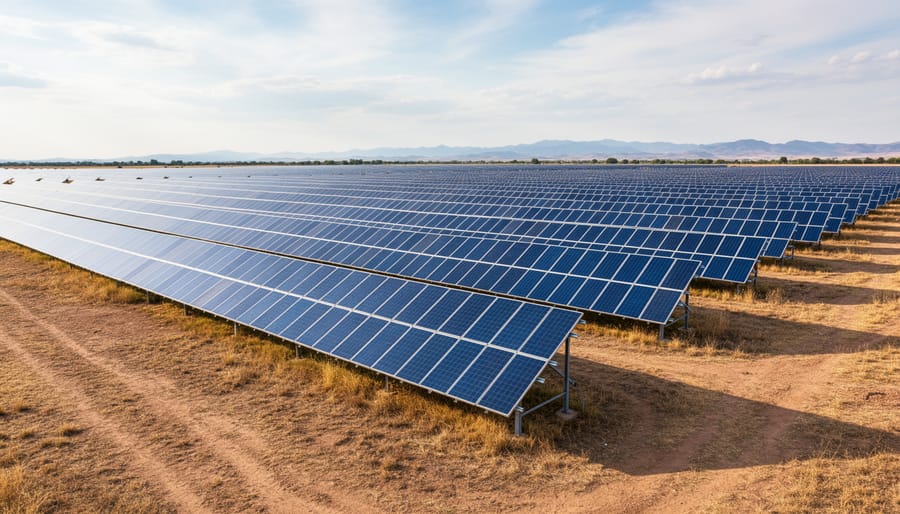
Renewable energy project financing refers to the specialized capital arrangements that enable solar developments to move from conception to commercial operation. Unlike conventional business loans, solar project financing centers on the project’s ability to generate predictable cash flows from electricity sales rather than solely on the developer’s overall financial strength. This asset-based approach has become the dominant model for utility-scale solar deployments across Europe, allowing developers to mobilize substantial capital for installations that can cost millions per megawatt of capacity.
Three fundamental financing structures shape how solar projects access capital. Project finance structures isolate the solar installation as a standalone legal entity, with lenders relying primarily on the project’s future revenues to secure their debt. This non-recourse or limited-recourse arrangement means lenders have restricted claims against the sponsor’s other assets if the project underperforms. Corporate finance, by contrast, uses the developer’s balance sheet as security, treating solar investments like any other company expenditure. Hybrid models blend elements of both, often beginning with corporate finance during development before transitioning to project finance once the installation reaches commercial operation and demonstrates stable revenue generation.
Solar projects pass through distinct lifecycle stages that demand different financing approaches. Development-phase funding covers land acquisition, permitting, grid connection studies, and engineering work before construction begins. This early-stage capital typically comes from developer equity or specialized development finance, as projects lack the tangible assets and contracted revenues that traditional lenders require. Construction financing bridges the period from groundbreaking to grid connection, when the project consumes capital but generates no revenue. Once operational, projects refinance construction debt with longer-term arrangements backed by actual generation data and power purchase agreements. This staged approach reflects how renewable innovations transform from concepts into revenue-generating assets, with financing mechanisms evolving to match each phase’s distinct risk profile and capital needs.
Eligibility Requirements for Solar Project Financing
Technical and Development Stage Requirements
Lenders assess solar projects against clear technical benchmarks before committing capital. A project typically needs site control secured through ownership or long-term lease, plus completed feasibility studies demonstrating the site’s solar resource potential and absence of major technical constraints. Grid connection agreements carry substantial weight, financiers expect at least a grid connection offer confirmed by the transmission or distribution system operator, with clarity on connection costs, timelines, and any required grid reinforcement works.
Technology selection matters for bankability. Most lenders prefer proven solar panel and inverter manufacturers with established track records and robust warranty support, rather than emerging technologies without performance histories. Projects should demonstrate compliance with relevant European technical standards and certification requirements, including safety regulations and grid code specifications that govern how the installation interacts with the electricity network.
Development milestones signal project maturity. Lenders look for environmental impact assessments completed and approved, building permits secured where required, and evidence that planning consents align with the intended construction timeline. Projects farther along this development pathway, closer to ready-to-build status, face less financing risk and generally access more favourable terms. Earlier-stage projects may secure development finance, but face stricter scrutiny and higher equity requirements until they reach financial close readiness with all major permits and agreements locked down.
Financial and Commercial Criteria
Financial institutions evaluate solar projects against stringent commercial benchmarks before committing capital. Power purchase agreements securing project revenue for ten to twenty years rank among the most critical requirements, as they demonstrate predictable cash flows and reduce offtaker risk. Lenders require DSCR levels that ensure loan repayments remain comfortably covered by project revenues even under conservative scenarios, with ratios typically expected to exceed minimum thresholds throughout the debt tenor.
Equity contribution expectations vary by project risk profile and financing source, though developers must generally bring meaningful capital to the table alongside debt. Financial projections must reflect realistic operational performance, maintenance costs, degradation rates, and revenue assumptions that withstand lender scrutiny during technical and market due diligence. Projects need audited or certified financial models showing viability across their expected lifespan, with sensitivity analyses demonstrating resilience to adverse conditions like reduced irradiation or curtailment.
Bankability also depends on demonstrating creditworthy counterparties for major contracts, adequate insurance coverage, and reserve accounts sized to manage operational contingencies. Commercial lenders examine whether projects can service debt obligations while maintaining operational standards, making robust financial planning and conservative projections essential to unlocking capital.
Legal and Regulatory Compliance
Securing financing for solar projects hinges on demonstrating full legal and regulatory compliance from the outset. Lenders require evidence that all necessary permits and approvals are either in place or on a clear path to being obtained. This typically includes planning permissions for site development, grid connection agreements from the transmission or distribution system operator, and construction permits from local authorities. Environmental compliance is equally critical, projects must complete required permitting and environmental assessments addressing biodiversity, land use, water resources, and visual impact according to national and EU environmental law. Land rights must be secure through ownership, long-term lease agreements, or documented rights of way, with legal title verified to eliminate future disputes. Projects also need to demonstrate compliance with renewable energy support scheme requirements where applicable, along with corporate good standing and adherence to anti-money laundering and sustainability standards that institutional lenders increasingly demand as prerequisites for financing approval.
How to Secure Financing for Your Solar Project

Preparing Your Financing Package
Securing financing begins with assembling a comprehensive package that demonstrates project viability to lenders. Your financial model forms the core, projecting revenues, operational costs, and debt service coverage over the project’s lifetime, typically 20-25 years for solar installations. Lenders expect detailed cash flow analyses showing your project can service debt under various scenarios, including reduced irradiation or lower electricity prices.
Technical documentation must prove your project’s engineering soundness. This includes resource assessments confirming site suitability, equipment specifications from reputable manufacturers, grid connection studies, and construction plans prepared by qualified engineers. Many lenders require independent technical advisors to validate these reports.
Legal documentation establishes your right to develop and operate. Assemble land agreements, planning permissions, grid connection approvals, and corporate structure details. Environmental and social impact assessments demonstrate regulatory compliance and stakeholder engagement, particularly for larger projects requiring formal permitting processes.
Commercial contracts strengthen your package considerably. Power purchase agreements or market hedging arrangements that secure revenue streams significantly improve bankability. If you’ve already negotiated offtake contracts or obtained feed-in tariff allocations, include these prominently.
Present this material in an organized data room that allows lenders efficient due diligence access. Well-prepared packages accelerate the financing process and signal professional project management.
Identifying and Approaching Funding Sources
Identifying the right funding sources begins with understanding your project’s profile. Commercial banks typically finance larger, operational-stage projects with proven revenue streams, while development banks and EU institutions often support earlier-stage developments or projects in emerging markets. Institutional investors, including pension funds and insurance companies, increasingly seek solar assets but usually require substantial project size and long-term stability.
Map potential sources by matching your project characteristics to lender preferences. A 50MW utility-scale project with a signed PPA might approach commercial banks or institutional investors, whereas a smaller community solar initiative could explore EU grant programs or specialized development finance institutions. European Investment Bank facilities target climate-positive projects regardless of size but require compliance with EU standards.
Engaging financial communities requires tailored approaches. Development banks prioritize impact metrics and alignment with policy goals, so emphasize carbon reduction and grid integration benefits. Commercial lenders focus on financial returns and risk mitigation, requiring detailed cash flow projections and security packages. When approaching multiple sources simultaneously, maintain transparency about parallel discussions and ensure your requests remain consistent across institutions to preserve credibility and negotiating position.
Navigating Due Diligence and Term Negotiation
Lender due diligence typically spans three to six months and examines every aspect of your project. Expect technical consultants to review your engineering designs, energy yield assessments, and equipment specifications. Financial advisors will stress-test your revenue projections, scrutinize power purchase agreements, and verify your cost assumptions. Legal teams will audit permits, land rights, grid connection agreements, and contractual arrangements with suppliers and off-takers. Environmental and social consultants will assess compliance with sustainability standards and potential risk factors.
Respond to information requests promptly and transparently. Establish a virtual data room containing organized documentation, and assign a dedicated team member to manage the process. When lenders identify gaps or concerns, address them with clear explanations or corrective action plans rather than defensive responses. Proactive communication builds trust and accelerates the process.
Key financing terms require careful negotiation. Interest rates vary considerably based on project risk profile, technology maturity, and market conditions. Debt tenors typically range from ten to twenty years for operational projects, matching revenue contract durations. Watch for prepayment restrictions that may limit refinancing flexibility as market rates improve. Covenant packages should be realistic, overly restrictive financial ratios or operational requirements can trigger technical defaults even when projects perform well commercially.
Negotiate adequate flexibility in construction milestones and completion dates, as delays often occur despite careful planning. Security arrangements must be proportionate; lenders will seek comprehensive security over project assets and contracts, but developers should resist personal guarantees or parent company recourse where possible. Fee structures matter, arrangement fees, commitment fees, and agency costs compound financing expenses, so ensure transparency and competitive pricing across all charges.
Financing Options Available Across Europe
Commercial and Development Bank Financing
Commercial banks remain the primary debt providers for utility-scale solar projects across Europe, typically offering senior secured loans covering 70 to 80 percent of total project costs. These institutions assess projects through rigorous credit committees that evaluate technical viability, revenue certainty, sponsor track record, and contractual structures before committing capital. Expect commercial lenders to require robust Power Purchase Agreements with creditworthy offtakers, proven technology from tier-one manufacturers, comprehensive insurance packages, and experienced engineering, procurement and construction contractors with performance guarantees.
The European Investment Bank and national development banks such as KfW in Germany or BEI in France offer complementary financing often at longer tenors and with greater risk tolerance than purely commercial sources. These public institutions frequently blend their loans with commercial bank debt in club or syndicated structures, improving overall terms for developers while de-risking projects for private lenders. Development banks also prioritise climate and energy transition goals, making them receptive to innovative projects or emerging technologies that commercial banks might consider too novel.
Loan tenors from commercial banks typically range from ten to eighteen years, aligned with PPA durations and expected asset life, while development banks may extend to twenty years or beyond. Most institutions structure repayments to match project cash flows, with sculpted or profiled debt service that accounts for seasonal generation patterns and operational expense schedules.
Public and EU Funding Mechanisms
Public financing mechanisms provide crucial support for European solar projects, particularly during early development stages and for innovative technologies. The European Union operates several major funding instruments specifically designed to accelerate renewable energy deployment. The Innovation Fund, capitalising on EU emissions trading revenues, supports large-scale demonstration of breakthrough clean technologies. InvestEU combines EU budget guarantees with public and private investment to mobilize capital for sustainable infrastructure, including solar farms and storage integration.
National support schemes vary significantly across member states but commonly include feed-in tariffs, renewable energy auctions with contract guarantees, and capital grants for specific project types. Many countries maintain dedicated development funds that provide concessional loans at favourable terms or co-investment grants that reduce upfront equity requirements for developers. These public mechanisms typically target projects that face market barriers, such as smaller community solar installations, hybrid renewable systems, or developments in regions with weaker grid infrastructure.
Accessing public funding usually requires demonstrating alignment with national renewable energy targets, meeting specific technical standards, and committing to transparent reporting throughout project implementation. Application processes often involve competitive selection procedures where projects are evaluated against criteria including carbon reduction impact, technological innovation, regional development contribution, and cost effectiveness. While public funds alone rarely finance entire commercial solar projects, they frequently serve as catalysts that improve overall project bankability and attract complementary private capital.
Equity and Alternative Capital Sources
Beyond conventional bank loans, solar projects increasingly attract equity investors and alternative capital providers who bring flexibility, risk appetite, and strategic value to financing structures. Private equity funds and infrastructure investors typically acquire ownership stakes in operational or near-operational solar assets, providing capital in exchange for long-term returns from power sales. These equity participants often accept higher risk than debt lenders, making them valuable partners for projects with innovative technology, merchant exposure, or complex structuring.
Crowdfunding platforms have emerged as accessible vehicles for smaller-scale solar developments, enabling retail investors to participate directly in renewable energy projects through online portals. While crowdfunding remains limited to specific project sizes and jurisdictions due to regulatory constraints, it democratizes access to solar investment and can complement traditional financing layers.
Institutional investors, pension funds, insurance companies, and sovereign wealth funds, increasingly allocate capital to renewable energy infrastructure, seeking stable, inflation-linked returns that align with their long-term liabilities. These investors typically enter projects through specialized fund managers or direct investment vehicles, bringing patient capital that supports portfolio diversification.
Green bonds and sustainability-linked financial instruments represent another evolving channel, allowing developers and sponsors to tap capital markets while signaling environmental commitment. As these alternative sources mature, they reduce dependence on traditional banking relationships and broaden the available capital base for Europe’s expanding solar pipeline.
Rights and Obligations in Financing Agreements

Financing agreements for solar projects establish a framework that balances lender security with developer operational flexibility. Understanding both what rights you retain and what obligations you assume helps prevent surprises and ensures you can meet contractual requirements while advancing your project successfully.
On the rights side, developers typically maintain ownership and operational control of their projects, subject to lender oversight. You retain the right to manage day-to-day operations, select contractors and suppliers within agreed parameters, and make routine operational decisions without prior consent. Most agreements preserve your ability to receive equity distributions once debt service obligations are met and reserve accounts are properly funded. You also maintain the right to refinance the project on terms acceptable to existing lenders, and to sell or transfer the project with lender approval, provided the buyer meets creditworthiness standards.
Your obligations under financing agreements extend across financial, operational, and reporting dimensions. Financial obligations include maintaining agreed debt service coverage ratios, funding reserve accounts for operations and debt service, and restricting distributions to equity holders when coverage falls below threshold levels. You’ll be required to secure and maintain comprehensive insurance coverage and provide subordination agreements from contractors and suppliers.
Operational covenants typically require you to maintain the facility according to industry standards, replace major equipment on schedule, and comply with all permits and environmental requirements. Many agreements restrict your ability to materially change the project scope, technology, or capacity without consent. You must maintain grid connection and power purchase agreements throughout the financing term and promptly address any curtailment or performance issues.
Reporting obligations form a critical component. Expect to provide quarterly financial statements, annual audited accounts, and regular performance reports showing generation output against forecasts. Lenders require immediate notification of material adverse events, including accidents, regulatory violations, or significant equipment failures. You’ll need to demonstrate ongoing compliance with all financial covenants and provide access for periodic lender site inspections.
Security arrangements grant lenders recourse if you default. Agreements typically include mortgage or charge over project assets, assignment of material contracts including PPAs, and pledge of project company shares. Step-in rights allow lenders to take control and remedy defaults, protecting their investment while providing you opportunity to cure issues before enforcement.
Where to Get Help and Resources
Navigating renewable energy financing can be complex, but developers don’t need to go it alone. A robust network of institutions, advisors, and information resources exists across Europe to support solar project financing efforts. Knowing where to turn for guidance can significantly streamline the funding process and improve your chances of financial close.
Start with the institutions that finance solar projects directly, as many offer advisory services alongside their lending activities:
- The European Investment Bank’s InnovFin Advisory programme provides technical assistance on structuring renewable energy project finance
- National promotional banks like KfW in Germany or ICO in Spain offer guidance on accessing public financing mechanisms
- SolarPower Europe and national solar associations maintain directories of financing sources and host networking events connecting developers with investors
- Specialized renewable energy law firms and financial advisors can guide you through due diligence, term negotiation, and documentation requirements
- The European Commission’s Energy Financing Portal aggregates information on EU funding programmes and eligibility criteria
For projects at earlier stages, incubator programmes run by organizations like EIT InnoEnergy provide both funding and mentorship. Many regional development agencies also maintain renewable energy desks that can connect you with local financing sources and advise on navigating regional permitting processes.
Industry conferences and financing summits create valuable opportunities to meet potential lenders, equity investors, and partners face-to-face. These events often feature sessions specifically addressing current financing structures, market terms, and emerging funding mechanisms. Building relationships within this ecosystem proves as important as the technical quality of your project documentation.
How to Apply or Complete the Process
Securing financing for a solar project follows a structured sequence. Start by engaging potential lenders or investors early in the development phase, presenting your initial feasibility study and project concept to gauge interest and identify the most receptive financing sources. Once you’ve selected preferred partners, submit a formal application that includes your complete financing package: financial models, technical reports, legal documentation, and environmental assessments.
Lenders will then conduct their due diligence process, typically reviewing technical feasibility, financial projections, legal title, permits, and contractual arrangements. Respond promptly to information requests and be prepared to clarify assumptions in your models or provide additional documentation. This phase often takes several months depending on project complexity and lender capacity.
Following satisfactory due diligence, you’ll receive a term sheet outlining proposed financing conditions. Negotiate key terms such as interest margins, repayment schedules, equity requirements, and any restrictive covenants. Once terms are agreed, legal teams draft definitive financing agreements.
The final stage is financial close, where all parties sign binding contracts, security interests are registered, and funds are released according to agreed drawdown schedules tied to construction milestones. Throughout this process, maintain transparent communication with lenders and be prepared to adjust timelines as regulatory approvals or technical requirements evolve.
What to Watch For
Beyond the obvious documentation requirements, pay close attention to change-of-law provisions in your financing agreements. Regulatory shifts affecting feed-in tariffs, grid access rules, or permitting standards can fundamentally alter project economics mid-construction. Ensure your contracts clearly allocate this risk and include mechanisms to renegotiate terms if policy changes materially impact cash flows.
Watch for hidden lock-in periods and prepayment penalties that restrict your flexibility. Some financing structures impose substantial fees if you want to refinance once the project reaches commercial operation and can access better terms. These restrictions can cost you significant savings opportunities as solar financing markets continue to evolve and become more competitive.
Monitor your debt service coverage ratio requirements throughout construction and early operation. Lenders typically require maintaining ratios above negotiated thresholds, and operational underperformance or unexpected costs can trigger technical defaults even when you’re making scheduled payments. Build operational reserves sufficient to weather initial performance variability while generation patterns stabilize.
Common Questions About Solar Project Financing
How long does it typically take to secure financing for a solar project? The timeline varies considerably based on project complexity and readiness. For well-prepared utility-scale solar projects with mature development pipelines, financing processes typically span six to twelve months from initial lender engagement to financial close. Smaller projects with streamlined structures might complete the process in three to six months, while complex arrangements involving multiple lenders, tranches, or novel financing structures can extend beyond a year. The preparedness of your documentation package significantly impacts these timelines, projects that submit complete technical studies, validated financial models, and secured permits move substantially faster than those requiring development work during due diligence.
Is there a minimum project size for commercial financing?
Commercial lenders and institutional investors typically focus on projects above certain capacity thresholds, often starting around 5-10 MW for utility-scale solar, though this varies by geography and lender. Smaller projects frequently access specialized small-scale financing programs, aggregated financing platforms, or regional development bank schemes designed for distributed generation.
How much equity contribution do lenders expect?
Equity requirements depend on project risk profile, developer track record, and revenue certainty, but solar projects commonly require equity contributions representing a meaningful portion of total capital costs. Well-structured projects with strong PPAs and experienced sponsors may access higher leverage, while earlier-stage developments or merchant exposure typically demand larger equity cushions to satisfy lender risk criteria.
Can solar projects be refinanced after completion?
Yes, refinancing operating solar assets is common practice once projects demonstrate stable operational performance. Developers often use construction or bridge financing during development and early operations, then refinance at more favorable terms once operational track records reduce lender risk, potentially releasing equity for redeployment to new projects.
What happens if financing falls short of project needs?
Financing gaps require bridging through additional equity, mezzanine debt, vendor financing arrangements, or adjustments to project scope. Developers should identify potential shortfalls early during financial modeling and maintain contingency plans, as gaps discovered late in development can delay or jeopardize projects.
What documentation proves most critical during lender due diligence? Beyond the financial model itself, lenders scrutinize technical studies validating energy yield assumptions, independent engineer reports assessing design and construction plans, legal opinions confirming site control and permits, and insurance certificates demonstrating adequate coverage. Environmental and social impact assessments carry increasing weight as sustainability criteria become standard in financing decisions. The quality and credibility of these supporting documents often matters as much as the numbers in your financial projections, experienced independent advisors lending their validation significantly strengthens your financing case.
How do lenders allocate risk between debt and equity holders? Financing structures distribute different risk categories across the capital stack. Lenders typically secure priority claims on project cash flows and assets while limiting their exposure to operational and market risks through comprehensive covenant packages and reserve requirements. Equity investors absorb residual risks but gain upside potential once debt obligations are met. Understanding this risk allocation helps developers structure deals that align investor expectations with project characteristics, and explains why lenders impose operational restrictions and reporting obligations throughout the financing period.
Accessing adequate capital remains the most critical enabler for achieving Europe’s ambitious solar deployment targets as we progress toward 2050 carbon neutrality. The financing landscape has matured significantly, with commercial banks, development institutions, and innovative fund structures now understanding how innovations work in solar technology and risk management. This growing sophistication means developers face fewer barriers than a decade ago, though navigating the process still demands thorough preparation and strategic alignment with lender expectations.
Success hinges on collaboration between project developers and financial institutions. Developers must approach financing as a partnership rather than a transaction, demonstrating not just technical competence but also commercial viability and regulatory compliance. Financial institutions, in turn, continue expanding their renewable energy portfolios, supported by favorable policy frameworks and increasing investor appetite for sustainable infrastructure. The convergence of public funding mechanisms, competitive commercial debt markets, and alternative capital sources creates multiple pathways to financial close for quality projects.
The momentum behind solar financing reflects broader European commitment to energy transition. As bankability standards become clearer and financing structures more standardized, the sector moves toward greater efficiency and accessibility. Developers who invest time understanding eligibility criteria, prepare comprehensive documentation, and engage proactively with funding sources position themselves to capitalize on this evolving market and contribute meaningfully to Europe’s renewable energy future.