
Solar investment funds pool capital from qualified investors to finance portfolios of photovoltaic projects across Europe, offering access to renewable energy returns through professionally managed vehicles that handle project selection, due diligence, and ongoing asset management. These funds have become essential instruments to bridge solar funding gap as the continent accelerates its clean energy transition, with structures ranging from open-ended vehicles focused on operational assets to closed-end funds targeting greenfield development.
For institutional investors and high-net-worth individuals, solar funds address a persistent challenge: gaining exposure to Europe’s expanding solar sector without the operational burden of direct project ownership. Fund managers aggregate dealflow, negotiate power purchase agreements, monitor regulatory changes across jurisdictions, and optimize portfolios for risk-adjusted returns. This consolidation of expertise matters particularly now, as solar installations require increasingly sophisticated financial structuring to navigate grid integration requirements, evolving subsidy frameworks, and competitive merchant power markets across European member states.
The investment case rests on several converging factors. Solar technology costs have declined substantially while generation efficiency continues improving, creating favorable project economics even in markets with reduced feed-in tariffs. Corporate demand for renewable power purchase agreements provides revenue stability, and the asset class offers inflation-hedging characteristics through index-linked contracts. Regulatory momentum, driven by updated climate targets and energy security considerations following recent geopolitical shifts, reinforces long-term policy support.
Understanding fund structures, eligibility criteria, investment processes, and investor rights is essential before committing capital. The following sections clarify how these vehicles operate, who can participate, and what prospective investors should evaluate when considering solar fund allocations.
What Solar Investment Funds Are and How They Work
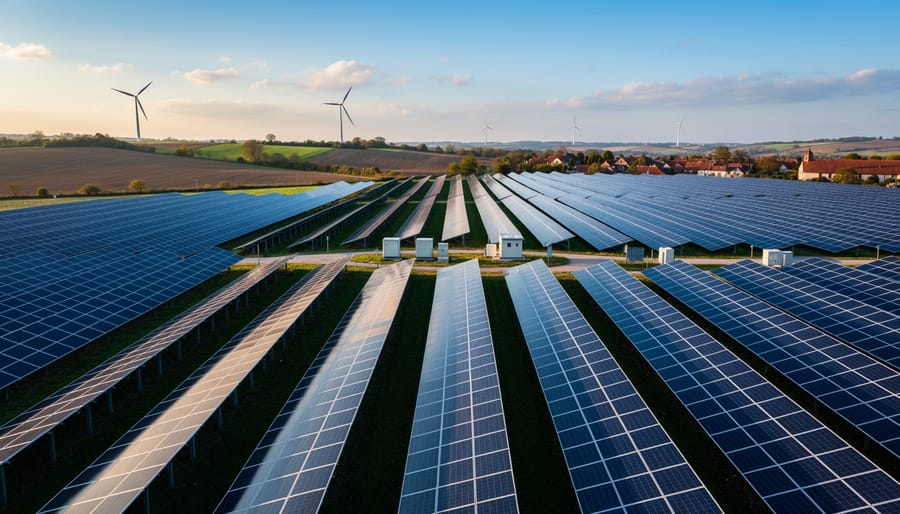
Fund Structures and Investment Approaches
Solar investment funds utilize three primary structures to deploy capital into European solar projects, each offering distinct characteristics that influence liquidity, risk management, and investor participation.
Closed-end funds represent the most common structure for solar infrastructure investment. These vehicles raise capital during a defined subscription period, then close to new investors while deploying committed capital across a portfolio of solar projects. Investors typically commit to a fixed term, often eight to twelve years, matching the long-term nature of solar asset returns. This structure allows fund managers to take patient capital approaches without pressure from redemption requests, enabling investment in projects spanning development through operation. The locked-in capital structure aligns particularly well with the extended timelines required for large-scale solar installations and the need to hold assets through their value-creation phases.
Open-end funds offer greater flexibility by allowing investors to enter and exit at regular intervals, usually quarterly or annually. This structure attracts investors seeking exposure to solar assets without long-term capital lockup. Fund managers maintain liquidity reserves to meet redemption requests while investing in operational solar assets that generate steady cash flows. The ongoing subscription and redemption mechanism requires careful balance between deploying capital efficiently and maintaining sufficient liquidity. Open-end structures tend to focus on stabilized, revenue-generating solar installations rather than development-stage projects, reducing volatility and supporting the regular valuation updates needed for investor transactions.
Hybrid models blend elements of both approaches, sometimes featuring a closed-end core portfolio complemented by open-end characteristics for certain investor classes. These structures aim to capture long-term value creation opportunities while providing some liquidity options. Some funds employ this approach to accommodate both institutional investors comfortable with extended commitments and qualified investors preferring periodic liquidity windows.
Each structure supports renewable energy innovations differently based on its capital stability, with closed-end funds typically supporting higher-risk development activities and open-end funds gravitating toward proven operational assets.
Eligibility Requirements for Investors

Minimum Investment Considerations
Minimum investment thresholds in solar investment funds differ dramatically depending on the fund’s structure, target investor base, and regulatory framework. This variation creates both opportunities and barriers for potential investors across the spectrum.
Institutional-focused infrastructure funds typically establish higher entry points to maintain operational efficiency and align with their sophisticated investor base. These funds, often structured as closed-end vehicles, require commitments substantial enough to justify the due diligence, legal documentation, and ongoing reporting involved in managing each investor relationship. The higher minimums also reflect the illiquid nature of underlying solar project investments and the long-term capital lock-up periods.
In contrast, retail-accessible funds and certain open-end structures have emerged to broaden participation in solar energy financing. These vehicles deliberately lower entry barriers, sometimes offering multi-tier investment options where larger commitments unlock preferential fee arrangements or priority access to co-investment opportunities. The democratisation of renewable energy investment has driven innovation in fund structures that balance accessibility with operational viability.
Between these extremes sits a middle market of funds targeting qualified investors, individuals who meet regulatory wealth or income thresholds but aren’t institutional entities. These funds strike a balance, setting minimums high enough to ensure serious commitment and manageable investor counts while remaining within reach of successful professionals seeking renewable energy exposure.
When evaluating minimum investment requirements, consider not just the initial commitment but also potential future capital calls in closed-end structures, which may require investors to maintain reserves or liquidity to meet subsequent funding obligations as solar projects progress through development and construction phases.
How to Evaluate and Select Solar Investment Funds

Selecting the right solar investment fund requires careful evaluation across multiple dimensions, beginning with the fund’s track record and investment approach. Look for funds with demonstrable experience deploying capital into operating solar projects, particularly those that have navigated different market cycles. A fund’s historical performance matters less in isolation than how that performance was achieved, through disciplined risk management, strategic asset selection, or market timing. Examine whether the fund focuses on greenfield development, acquiring operational assets, or a mixed approach across the project lifecycle.
Management team expertise is perhaps the most critical factor. The ideal team combines deep renewable energy sector knowledge with proven fund management capabilities. Look for managers who can articulate their investment thesis clearly, demonstrate hands-on experience with solar project economics, and maintain strong relationships across European markets. Their ability to source deals, conduct technical due diligence, and manage construction and operational risks directly impacts returns. Teams with in-house technical expertise often outperform those relying entirely on third-party advisors.
Portfolio diversification across European markets provides essential risk mitigation. Funds concentrated in a single country expose investors to regulatory changes, weather patterns, and market disruptions specific to that region. Stronger funds typically spread investments across multiple jurisdictions with different regulatory frameworks, electricity market structures, and solar resource profiles. This geographic spread also allows managers to secure renewable funding opportunities as different markets mature at different rates.
| Evaluation Criteria | Key Considerations | Risk Implications |
|---|---|---|
| Geographic Diversification | Spread across multiple European markets with varying regulatory environments | Single-country concentration increases policy and market risk |
| Project Stage Focus | Mix of development, construction, and operational assets | Development-only funds carry higher execution risk but potential for higher returns |
| Management Experience | Track record in solar investments, technical capabilities, deal sourcing network | Inexperienced teams may underestimate construction or regulatory challenges |
| Sustainability Alignment | SFDR Article 8 or 9 classification, impact reporting practices | Misalignment with investor ESG requirements may limit institutional participation |
Alignment with sustainability goals extends beyond simply investing in renewable energy. Evaluate whether the fund adheres to EU Sustainable Finance Disclosure Regulation standards, how it measures and reports environmental impact, and whether it considers broader ESG factors such as sustainable solar inclusivity principles in project selection. Some funds integrate social impact criteria, prioritizing projects that benefit local communities or advance energy access.
Fee structures vary considerably and deserve close scrutiny. Most funds charge management fees and may include performance-based incentives, but the specific terms differ widely. Understand all layers of fees, fund-level management fees, carried interest structures, and whether fees are charged on committed or deployed capital. Ask about hurdle rates and how performance fees align manager interests with investor returns over the fund’s life.
The Investment Process: How to Apply and Complete Your Investment
Documentation and Compliance Requirements
Investing in solar investment funds requires completing a comprehensive documentation and compliance process designed to meet European regulatory standards. The primary documents include investor qualification forms that establish your accredited or professional investor status, subscription agreements outlining fund terms and capital commitment schedules, and detailed disclosures about investment risks and strategies.
Know Your Customer (KYC) and Anti-Money Laundering (AML) verification forms the foundation of the compliance framework. Fund managers must verify investor identity, source of funds, and beneficial ownership structures. You’ll typically need to provide government-issued identification, proof of address, bank statements, and documentation demonstrating your financial qualifications. Corporate investors face additional requirements, including registration certificates, corporate structure charts, and authorized signatory documentation.
European funds must comply with the Sustainable Finance Disclosure Regulation, which mandates detailed SFDR sustainability disclosures about environmental and social characteristics. As an investor, you’ll receive pre-contractual disclosures explaining how the fund integrates sustainability factors, metrics for measuring environmental impact, and periodic reporting on portfolio companies’ carbon footprint and renewable energy generation.
Tax documentation varies by investor jurisdiction but commonly includes W-8 or W-9 forms for US tax purposes, self-certification forms under the Common Reporting Standard for automatic exchange of financial account information, and country-specific tax residency declarations. Some funds require legal opinions from your counsel confirming investment authority and regulatory compliance.
If you need guidance navigating these requirements, funding eligibility help resources can connect you with advisors experienced in renewable energy investment documentation. The complexity of documentation reflects regulatory safeguards protecting both investors and the integrity of European financial markets.
Investor Rights and Obligations
When you invest in a solar fund, you’re entering a formal partnership with specific rights designed to protect your interests and obligations that ensure the fund can operate effectively. Understanding both sides of this equation is crucial before committing capital.
Investors typically receive quarterly reports detailing fund performance, project updates, and financial statements. These reports should include valuation methodologies for underlying solar assets, operational metrics like energy production and revenue generation, and a clear breakdown of costs and returns. Annual audited financial statements are standard, prepared according to International Financial Reporting Standards (IFRS). Many funds also provide access to online portals where investors can track their holdings in real-time, view project-level data, and access historical documents.
The level of detail varies by fund structure and regulatory requirements. Funds marketing to professional investors under the Alternative Investment Fund Managers Directive (AIFMD) must provide comprehensive risk disclosures and performance data. You have the right to ask questions during annual meetings and, in some structures, request additional information about specific investment decisions or portfolio changes.
Your ability to influence fund decisions depends on your investor class and the fund’s governance structure. Most institutional investors gain advisory committee seats or direct voting rights on major decisions like changes to investment strategy, replacement of the fund manager, or approval of conflicts of interest. Retail investors in broader funds typically have more limited governance rights, often restricted to voting on fundamental policy changes or fund liquidation.
Some funds establish investor advisory boards that review and approve significant transactions, provide market insights, and help resolve conflicts between the management company and limited partners. While day-to-day investment decisions remain with professional fund managers, these governance mechanisms ensure alignment between investor interests and management actions.
Closed-end funds, which are common for solar infrastructure investments, typically offer no redemption rights during the fund’s life. Your capital remains committed until projects are sold or the fund reaches its planned liquidation date. Open-end funds may allow periodic redemptions, but these often come with notice periods, gates that limit the percentage of capital that can be withdrawn simultaneously, and potential discounts if you exit during market downturns.
Some funds offer secondary market options where you can sell your stake to another qualified investor, though this usually requires fund manager approval and may result in selling at a discount to net asset value. The limited liquidity reflects the nature of the underlying assets, solar projects are long-term infrastructure investments that can’t be quickly liquidated without significant value loss.
When you invest in funds that use capital call structures, you’re committing to provide capital over time rather than funding your full investment upfront. The fund manager issues capital calls as investment opportunities arise, typically with advance notice. Missing a capital call can result in penalties, including dilution of your ownership stake, forfeiture of previous contributions, or legal action to enforce the commitment.
You’ll also have ongoing regulatory reporting obligations depending on your investor type and jurisdiction. Institutional investors must often report their renewable energy holdings for transparency and sustainability disclosure requirements under the Sustainable Finance Disclosure Regulation (SFDR). Tax reporting varies by country, but most investors receive annual tax statements detailing income, capital gains, and any applicable withholding taxes on cross-border investments.
These obligations continue throughout your investment period, so ensure you have the operational capacity and resources to meet them consistently.
Where to Get Help and Additional Resources
Navigating the solar investment fund landscape requires access to reliable expertise and up-to-date information. Several types of organizations can help prospective investors make informed decisions and complete the investment process.
Financial advisors with renewable energy specialization offer crucial guidance for evaluating fund options against individual investment goals. Independent wealth managers increasingly maintain dedicated renewable infrastructure teams that understand both financial and technical aspects of solar investments. Investment consultants who focus on infrastructure or ESG portfolios can provide comparative analyses across fund offerings without manufacturer bias.
Industry associations serve as valuable knowledge hubs. SolarPower Europe publishes regular market intelligence reports and maintains directories of investment funds active in the sector. National solar associations across EU member states often host investor networking events and provide country-specific regulatory guidance. The European Association of Long-Term Investors connects institutional investors with sustainable infrastructure opportunities.
Regulatory bodies offer essential compliance resources. The European Securities and Markets Authority maintains investor warnings and fund registration databases. National financial supervisory authorities in each EU country provide localized guidance on investor protections and qualification requirements.
Several categories of resources can support your investment journey:
- Fund platforms like Luxembourg for Finance and specialized renewable energy fund databases that aggregate solar investment opportunities
- Due diligence providers offering technical and financial analysis of underlying solar project portfolios
- Legal firms with renewable energy practices that review subscription agreements and investor terms
- ESG rating agencies that assess fund sustainability credentials and impact measurement methodologies
- Tax advisors familiar with renewable energy investment structures across multiple European jurisdictions
Professional networks such as the Institutional Investors Group on Climate Change facilitate peer learning among investors pursuing net-zero portfolios. Online resources including the International Energy Agency’s renewable finance reports provide broader market context without product promotion.
Many fund managers themselves offer educational webinars and detailed investment memoranda that explain their specific approaches. Engaging multiple resource types creates a comprehensive foundation for confident investment decisions aligned with both financial objectives and Europe’s renewable energy transition.
Common Questions About Solar Investment Funds
What are the typical risk profiles of solar investment funds?
Solar investment funds generally fall into moderate-risk categories, with established operational projects offering more stable returns than development-stage ventures. Risk levels vary based on fund strategy, geographic diversification across European markets, and the mix of operational versus greenfield projects in the portfolio.
How long should I expect to keep my capital committed?
Most closed-end solar infrastructure funds operate with investment horizons ranging from several years to a decade or more, reflecting the long-term nature of solar assets. Open-end structures may offer more flexibility, though redemption terms and notice periods vary by fund.
How do solar funds measure and report environmental impact?
Funds typically report metrics such as megawatts of capacity financed, carbon emissions avoided, and alignment with EU taxonomy criteria under SFDR regulations. Many also track contributions toward national renewable energy targets and UN Sustainable Development Goals.
What’s the difference between investing through a fund versus directly in projects?
Solar funds provide professional management, diversification across multiple projects, and lower individual capital requirements compared to direct investment. Direct project investment offers more control but requires substantial expertise, larger capital commitments, and hands-on involvement in project development and operations.
Understanding tax implications is crucial for prospective investors. Treatment varies significantly based on investor domicile, fund structure, and jurisdiction where projects operate. Some European countries offer tax incentives for renewable energy investments, while cross-border considerations may involve withholding taxes and treaty benefits. Consulting a tax advisor familiar with both your home jurisdiction and European renewable energy frameworks is essential before committing capital.
Performance expectations should align with the fund’s strategy and risk profile. Operational solar assets typically generate steady, predictable cash flows supported by long-term power purchase agreements, though returns reflect this stability. Development-focused funds may target higher returns to compensate for construction and regulatory risks. Rather than chasing quoted return targets, evaluate whether a fund’s historical performance and underlying assets match your risk tolerance and investment objectives.
The liquidity profile of solar funds differs substantially from publicly traded securities. Closed-end structures typically lock up capital for the fund’s life, with limited secondary market options for selling interests before maturity. This illiquidity premium forms part of the investment proposition but requires careful consideration of your overall portfolio needs and cash flow requirements over the investment horizon.
Solar investment funds represent a powerful mechanism for channeling capital toward Europe’s renewable energy future. As the continent accelerates toward its 2050 carbon neutrality targets, these investment vehicles bridge the gap between those seeking sustainable returns and the solar projects that need financing to reach completion.
For prospective investors, the path forward requires careful evaluation of fund structures, thorough assessment of management expertise, and clear understanding of your own investment objectives and constraints. The regulatory frameworks governing these funds, designed to protect investors while enabling capital formation, provide a foundation for informed decision-making, but they don’t replace the need for independent due diligence.
The solar industry’s growth trajectory creates genuine opportunities, yet each fund presents its own risk-return profile, governance approach, and strategic focus. Success lies in matching your investment capacity and timeline with funds whose strategy, geographic focus, and project selection align with your goals.
Moving forward, collaboration between institutional investors, retail participants, fund managers, and project developers will determine how quickly Europe’s solar capacity scales. By bringing rigorous analysis to investment decisions and maintaining realistic expectations about both returns and impact, investors contribute not just capital but credibility to the renewable energy transition. The framework exists; informed participation accelerates the progress.