
EU solar energy policy works on two levels: Brussels sets the direction and the minimum standards, and each member state decides most of the practical details, from support schemes to permitting procedures. For anyone planning to invest in, build, or advise on solar in Europe, that split is the single most useful thing to understand. It explains why a rooftop project in one country can move through approvals in weeks while a comparable project elsewhere follows a different path entirely.
At EU level, solar sits within the wider climate and energy framework, including the renewable energy targets, the push for faster permitting, and the rules that give households, communities, and businesses the right to generate and share their own power. Those common rules create a stable, predictable foundation for the sector. National governments then translate them into law, which is where eligibility, incentives, and grid connection terms take shape.
The outlook is genuinely encouraging. Solar remains one of the fastest-growing sources of power on the continent, and collaboration between institutions, industry, and communities is driving real innovation. This guide explains how the framework works, who can take part, what rights and duties come with participation, and where to find official guidance.
What EU Solar Energy Policy Is and How the Framework Fits Together
How EU-Level Rules Become National Solar Policy
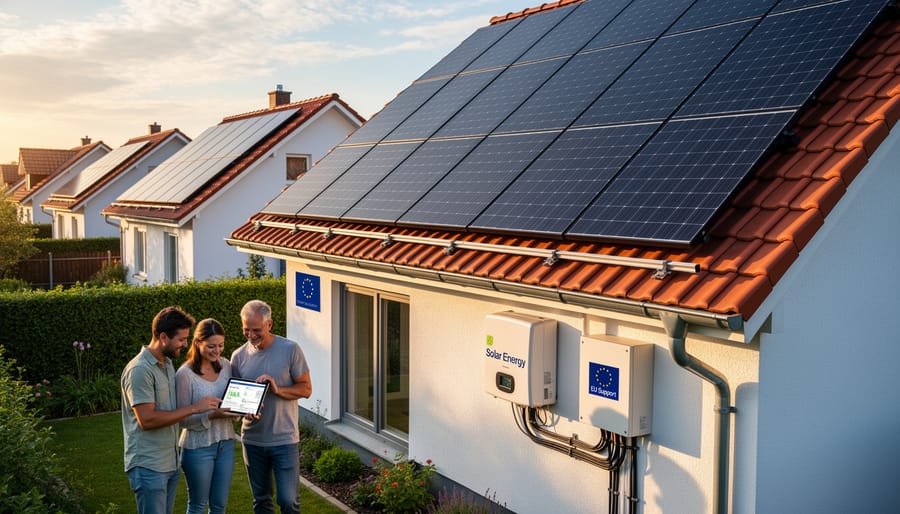
EU solar policy starts in Brussels but takes effect in national law. The EU sets the direction through regulations, which apply directly, and directives, which set binding goals but leave the method to each country. The renewable energy directive is the best-known example for solar. Once it is adopted, every member state has a deadline to transpose it into domestic legislation, usually by amending energy, planning, and grid rules. Reviewing Member-state directive implementation shows how much that step can vary in practice.
National energy and climate plans, or NECPs, are the bridge between EU ambition and domestic action. Each country sets out how it intends to contribute to shared goals, including its solar deployment pathway, support measures, and grid investment. The NECPs under the Governance Regulation process also gives the Commission a structured way to review drafts and recommend improvements, which keeps national strategies aligned without removing local flexibility.
That flexibility explains why requirements and timelines differ. Countries start from different grid conditions, permitting systems, administrative capacity, and energy mixes. A rooftop owner in one country may face a simple notification process, while a developer in another navigates several regional authorities. Transposition deadlines can also pass before national rules are fully operational.
For developers and investors, the practical lesson is to read the EU rule and its national implementation side by side. The directive tells you where policy is heading. The national law and plan tell you what applies to your project today.
The Role of Advocacy in Shaping the Solar Market

Member-led organisations give the solar sector a structured voice in Brussels and in national capitals. Rather than speaking for a single company, they pool the experience of manufacturers, installers, developers, and technology providers and turn it into positions that policymakers can actually use.
That influence typically works through three channels. First, consultations. When the European Commission or a national ministry opens a call for evidence on a draft rule, associations submit coordinated responses that flag practical issues, such as how a permitting step plays out on a real project, before they become costly obstacles. Second, evidence-based market research. Credible data on deployment, costs, and grid integration gives decision-makers a factual foundation, which is far more persuasive than opinion. Third, cross-sector collaboration. Working alongside storage providers, grid operators, and digital energy specialists helps ensure that solar is designed into the wider system from the start.
This last point matters most for the long term. By bringing different parts of the energy value chain to the same table, advocacy supports solar that connects smoothly with storage, flexible demand, and smart grids. The result is a policy environment shaped by shared learning, one that helps the sector grow in step with Europe’s broader sustainability goals.
Who Qualifies: Eligibility for Solar Support, Permitting, and Market Access
EU-level rules set the direction, but whether a given household, company, or public body qualifies for solar support is decided nationally or regionally. Across the Union, a handful of participant categories recur, and each tends to face a recognisable set of conditions. Knowing which category you fall into is the quickest way to find the right door.
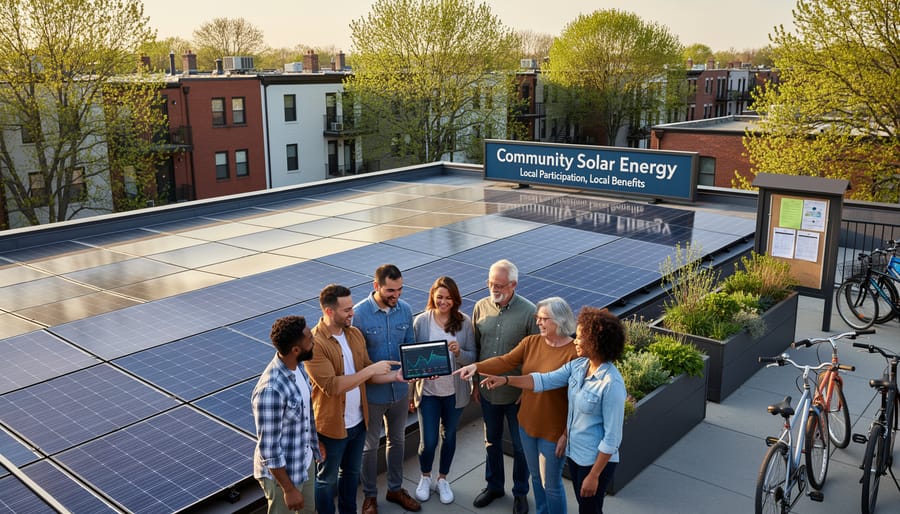
Households and prosumers are the most familiar group. Anyone who generates renewable electricity for their own use, and often feeds the surplus into the grid, can usually qualify as a self-consumer. Energy communities and other collective projects, such as citizen cooperatives or neighbourhood schemes, are increasingly recognised in their own right, which opens participation to people who can’t install panels on their own roof. Businesses, public bodies, and utility-scale developers round out the picture, each with different routes into support, permitting, and grid access.
The table below summarises the general picture. Treat it as a starting checklist rather than a rulebook, since the details differ from one member state to the next.
| Participant type | Common support or access routes | Typical eligibility considerations | Who to verify with |
|---|---|---|---|
| Households and prosumers | Self-consumption arrangements, surplus export, grants or tax incentives | Property ownership or tenancy rights, system size limits, technical standards | National energy authority, local distribution operator |
| Energy communities | Shared generation, collective self-consumption, community schemes | Legal form, membership rules, local participation requirements | National regulator, regional energy agency |
| Businesses | On-site generation, power purchase agreements, investment support | Company size, site suitability, grid capacity | Energy ministry, grid operator |
| Public bodies | Rooftop programmes on public buildings, dedicated funding lines | Procurement rules, building ownership, funding conditions | Regional or municipal authority |
| Utility-scale developers | Competitive auctions, long-term contracts, grid connection queues | Site permits, environmental assessment, technical grid codes | Permitting office, transmission system operator |
Across all categories, the same types of conditions tend to appear. Support schemes often look at system size, technology standards, and whether the project is new. Grid connection depends on available network capacity and compliance with technical codes. Self-consumption rules usually hinge on who owns or controls the generating asset and where the electricity is consumed. Permitting adds planning, environmental, and building requirements that reflect local priorities.
Access to capital is part of qualifying too. Banks, funds, and insurers increasingly shape which projects move forward, which is why building bridges with financial communities matters for developers and collective schemes alike. Equally, broad participation strengthens delivery: the evidence from across Europe shows how inclusivity drives success in the energy transition, giving renters, smaller organisations, and community groups a genuine route in.
Before committing time or capital, confirm the exact criteria with the competent authority in your country or region. Rules change, and a quick conversation with the right office can save months.
Rights and Obligations for Solar Producers, Consumers, and Developers
Staying Compliant as Policy Evolves
Solar rules rarely stand still. Directives get revised, national transposition deadlines shift, and permitting or grid connection procedures are refined as markets mature. Treating compliance as a one-time hurdle is a quick way to fall behind, so build monitoring into your normal workflow instead.
Start with a simple routine. Subscribe to alerts from the European Commission’s energy pages, your national energy ministry, and your regulator. Assign one person on the team to review updates on a set schedule, such as monthly, and to flag anything that touches permitting, grid codes, support schemes, or reporting duties.
Documentation matters just as much. Keep a dated record of permits, technical certificates, grid connection agreements, and any correspondence with authorities. When a rule changes, a clear paper trail shows what applied when you made your decisions and makes audits far less stressful.
Industry associations are a strong ally here. Member-led organisations track consultations, share market research, and often explain draft proposals before they become binding. Joining working groups also lets you contribute practical, project-level experience to the policy conversation, which helps shape workable rules and gives you early sight of what’s coming.
Where to Get Help: Official Bodies, Industry Associations, and Funding Information
Finding reliable guidance is easier when you know which door to knock on. Start at the EU level, where the European Commission’s energy portals explain current policy direction and point to the relevant directives. From there, move to national energy ministries and regulators, which set the rules that actually apply to your project. Regional and local permitting offices handle planning consent, while transmission and distribution system operators are your contact for grid connection procedures and technical requirements.
Money questions deserve their own track. EU funding information channels and national managing authorities publish calls and conditions, and our guide to funding eligibility walks through how to check whether a project fits. If you are weighing private capital, the overview of solar investment funds explains the process from first enquiry onward.
Industry associations add a different kind of value. Member-led organisations offer market intelligence, consultation briefings and networking with peers across the value chain, from developers and installers to grid operators and researchers. That collaboration is often where practical solutions to permitting or connection bottlenecks emerge.
Who sets solar rules in the EU?
The EU sets overarching targets and legislation, but member states transpose them into national law. Your national and regional authorities define the rules that apply to your project.
Do support schemes differ between member states?
Yes. Eligibility, incentives and procedures vary by country and sometimes by region, so always confirm details with the competent national body.
Where can I check current eligibility?
Consult your national energy ministry or regulator and the official programme pages of the funding body. Conditions change over time, so rely on official sources rather than older summaries.
How can businesses influence policy?
Joining an industry association gives you a voice in consultations and access to evidence-based market research. Contributing data and practical experience strengthens the case for workable rules.
Whichever route you take, combining official guidance with industry networks gives you both certainty and context.
Market Trends Shaping Where EU Solar Policy Is Heading
Where EU solar policy is heading is increasingly shaped by what the market is already doing. Solar is no longer treated as a stand-alone generator, and that shift is steering how rules, incentives and grid planning evolve. The broad directions are well established, even if the pace differs from country to country.
Storage and smart grids sit at the center. Pairing panels with batteries lets owners use more of their own generation and eases pressure on local networks, while digital metering and flexible demand help match supply to consumption. Policymakers are paying closer attention to how solar can support grid stability instead of simply feeding in power. Many of the renewable innovations behind this change come from collaboration between developers, grid operators and technology providers.
Distributed generation is also gaining ground. Rooftop systems on homes, warehouses and public buildings bring generation close to where energy is used, and energy communities give neighbors, small businesses and local authorities a way to share the benefits. Hybrid and co-located projects, such as solar combined with wind or storage on a single connection point, make better use of scarce grid capacity and land.
Because the participants and projects differ so much, it helps to keep two groups of expectations in mind:
Common rights of solar participants
- Generating and consuming your own renewable electricity.
- Taking part in an energy community or collective project.
- Following clear, fair procedures for grid access and permitting.
Common obligations to plan for
- Meeting national permitting and planning requirements.
- Complying with technical, safety and grid code standards.
- Keeping required records and meeting any reporting duties.
Finally, supply chain resilience and sustainability are moving up the agenda. Stakeholders increasingly value diverse sourcing, responsible manufacturing, reuse and recycling, and transparent product information. For investors and developers, building these considerations into project planning now is a practical way to stay aligned with where the framework is going, and to contribute to it constructively.
Conclusion
EU solar policy works best when you see it as a set of connected layers. EU-level targets and legislation set the direction, national and regional authorities turn them into support schemes, permitting rules, and grid procedures, and advocacy plays a real part in shaping what comes next.
Participation is broad. Households, energy communities, businesses, public bodies, and utility-scale developers can all take part, provided they meet the conditions set where the project is located. With that participation come rights, such as generating and consuming your own renewable electricity, alongside obligations like permitting compliance, technical standards, and grid code adherence.
For authoritative answers, start with the European Commission’s energy resources, then check your national ministry or regulator, your local permitting office, and your grid operator. Industry associations add market intelligence and valuable peer connections.
The path to carbon neutrality by 2050 depends on all of these players working in step. Engage early with policymakers, share evidence and lessons with industry peers, and keep building partnerships across the value chain. Solar deployment accelerates when collaboration comes first.